
Landscape with the Fall of Icarus, Pieter Bruegel the Elder
Bruegel, Caravaggio, Hammersøi and Taking Better Photographs
Almost every morning I have the same little ritual. I sit down with a cup of tea and spend some time looking through one of my many photography and art books.
The thing is I like buying photo books… but hardly ever take the time to look at them properly. So now, I read the text, study the pictures and simply enjoy them. Sometimes I’m looking for inspiration, but more often than not I’m just looking for pleasure.
Of course, photographers can learn a huge amount from other photographers, but I think painters can teach us just as much. A painter may spend days, weeks or even months creating a single image carefully considering the placement of subjects, the use of colour, the direction of the light and the way the eye moves around the frame. They are all deliberate choices. Caravaggio, for example, is popular with photographers for his use of chiaroscuro (the dramatic contrast between light and dark), and another favourite of mine, Hammershøi was great at creating calm, thoughtful scenes with muted colours and soft light. These are both ideas I bring to my wedding photography work.
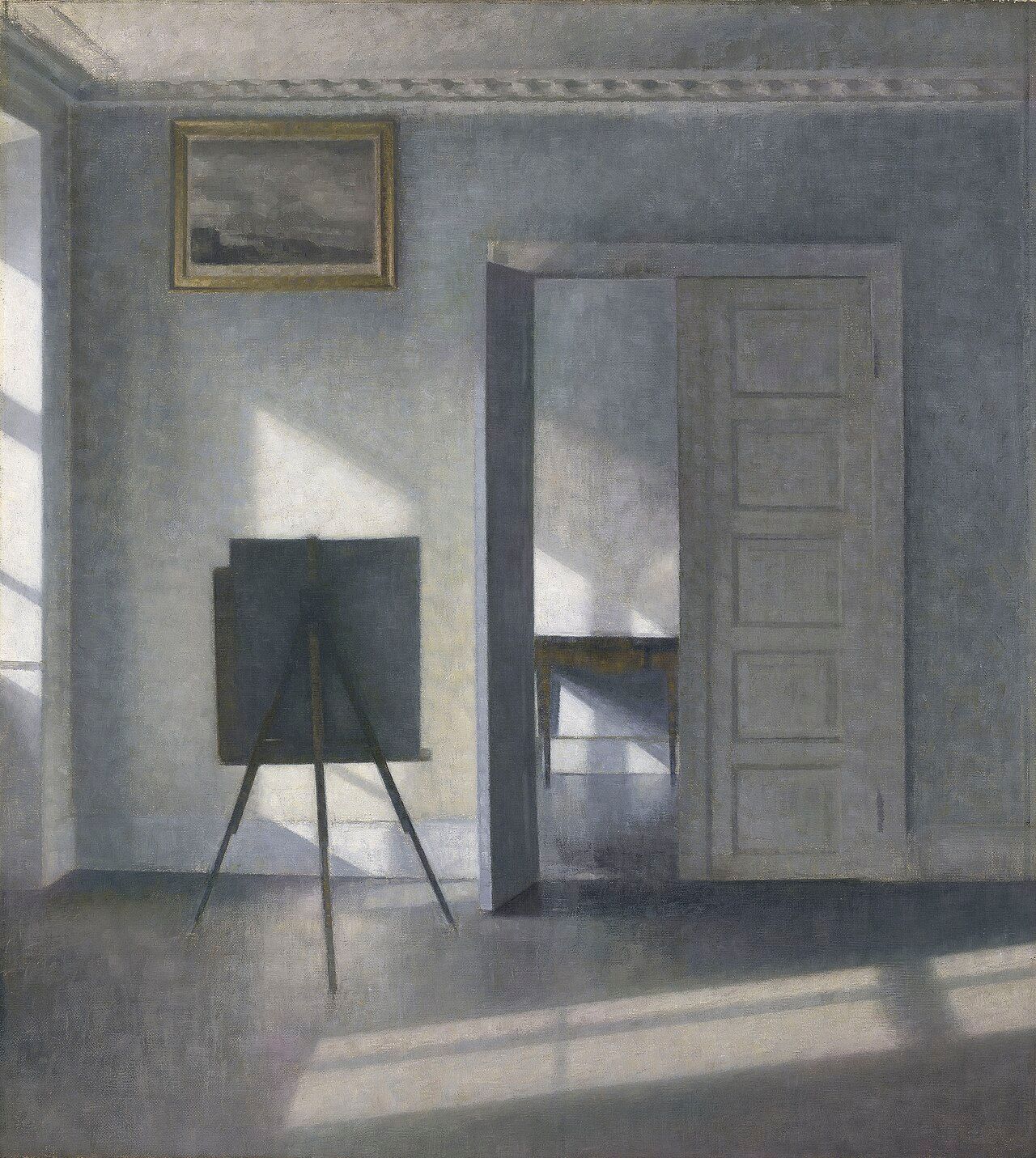
Interior with an Easel, Bredgade 25, Hammersøi
For me, one of the great challenges in my photography is capturing well-known scenes in a way that isn’t cliché. How can I photograph the Eiffel Tower, for example, in a way that still tells us where we are but feels more considered than the obvious wide shot of the whole thing? And how do I capture love without a classic “cake topper” pose of a couple arm in arm looking straight to camera or kissing?
The other day I came across a painting by Pieter Bruegel the Elder called Landscape with the Fall of Icarus. This is a story that’s been told in hundreds of paintings but often in the same way. The obvious image of Icarus against the sun as his wings break apart and he plummets to the sea.
Bruegel takes a different view. At first glance, we see a large vista of everyday life. A farmer is ploughing his field, sheep graze peacefully, a large sailing ship moves across the water and fishermen go about their day. The sun sits low in the sky. Just people going about their business and no drama in sight.
It’s only after looking carefully that we notice something strange. In the bottom right corner of the painting, almost hidden from view, are a pair of legs disappearing into the sea. That’s Icarus. The central figure of the story is almost invisible. Even more striking is that nobody appears to notice. The fisherman nearby carries on fishing. The farmer continues ploughing. Life simply goes on.
I love this painting for two reasons.
The first is photographic. I love the idea that the main subject of an image doesn’t always have to dominate the frame. Sometimes it’s more interesting to make people search for the important part of the picture. It’s one of the reasons I enjoy creating photographs where a couple might be a tiny part of a much larger scene. The viewer has to discover them rather than having them presented front and centre.
Bruegel wasn’t the only painter to understand this. Another favourite is Turner’s Rain, Steam and Speed. At first it looks like a painting about the weather, atmosphere and landscape. The train itself is surprisingly small, almost swallowed by rain and steam. But look closer and there’s much more going on. What makes the painting so fascinating is that Turner places the train, this symbol of the future, within a much bigger story. Off to the left we can just make out a peaceful rural scene, representing a way of life that had existed for centuries. Then, looking closer still, we notice a tiny hare running across the tracks directly in front of the train.
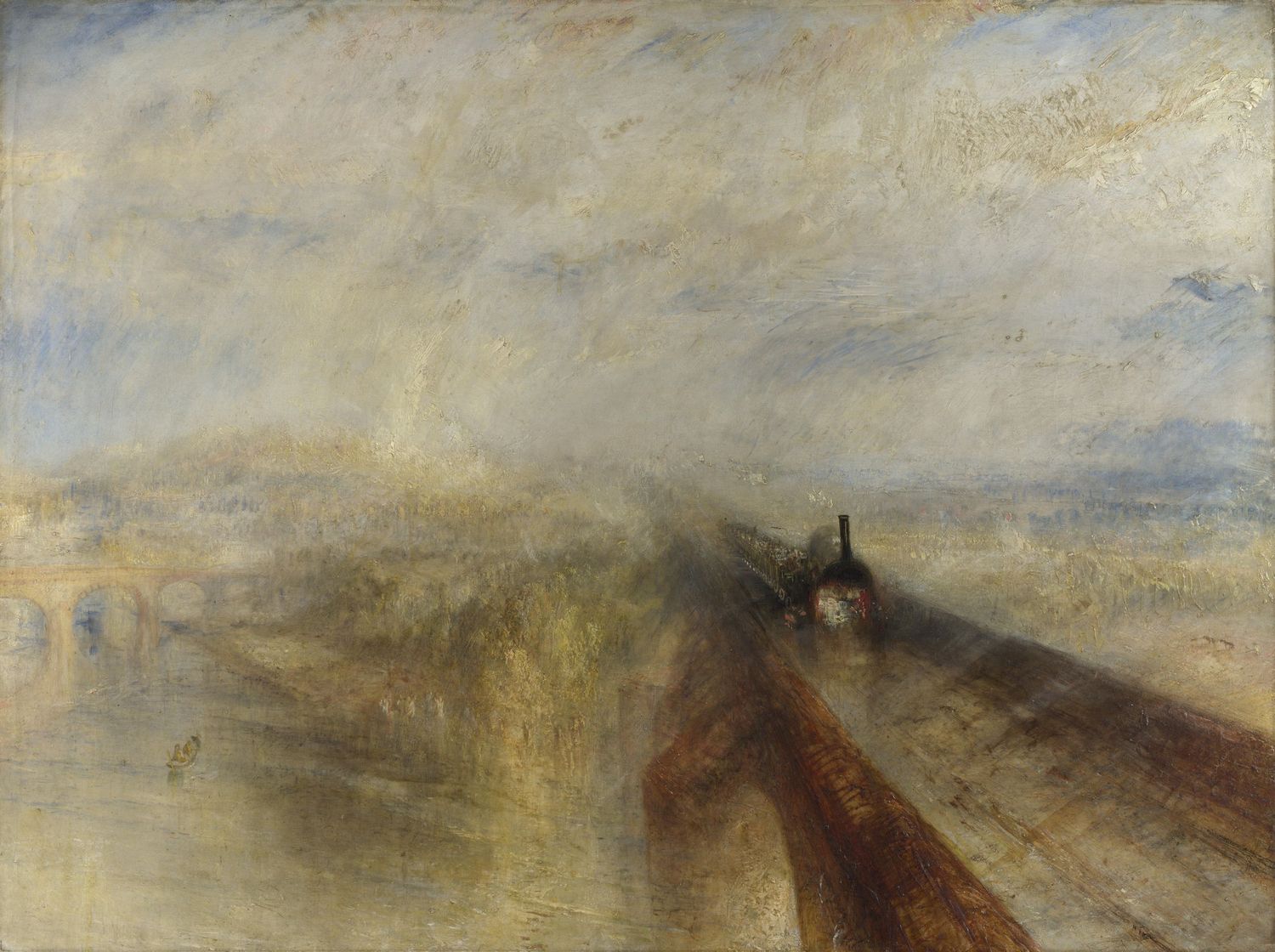
Rain, Steam and Speed – The Great Western Railway, Turner
Before the railway age, that hare would have been one of the fastest things most people in the English countryside had ever seen. Now it is about to be overtaken, and maybe squashed, by a machine that represents the future arriving at alarming speed.
Like Bruegel’s Icarus, the details that matter most are easily missed. Both artists invite us to look carefully, to make connections and to discover the story for ourselves. As photographers, I think there’s something valuable in that. Not every picture needs to announce its meaning immediately. Sometimes the most rewarding photographs are the ones that reveal themselves slowly.
The second reason I love Bruegel’s painting is a bit more philosophical. As Icarus plops into the sea, the farmer keeps on ploughing, the sheep keep on grazing and the fisherman keep on fishing. Life carries on. The painting reminds me that whatever we’re experiencing, the world keeps turning and ultimately we don’t really matter as much as we’d like to think. Nihilistic? Maybe, but I find it reassuring and a reminder not to take ourselves too seriously.
And perhaps that’s why I keep looking at paintings - not just to learn how to make better photographs, but to learn how to look more carefully at the world.
YOUR LONDON BASED DOCUMENTARY WEDDING PHOTOGRAPHER
If you're looking for more than just posed photographs, if you want your wedding day to be documented authentically, capturing real emotions and heartfelt connections – then you've found your documentary wedding photographer. Get in touch and let's create memories together. Send your enquiry and you'll be able to download a free copy of my very useful Wedding Guide.
